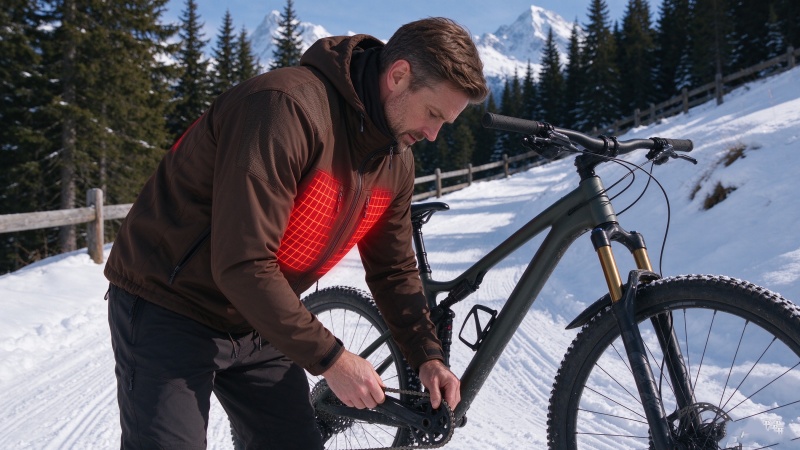
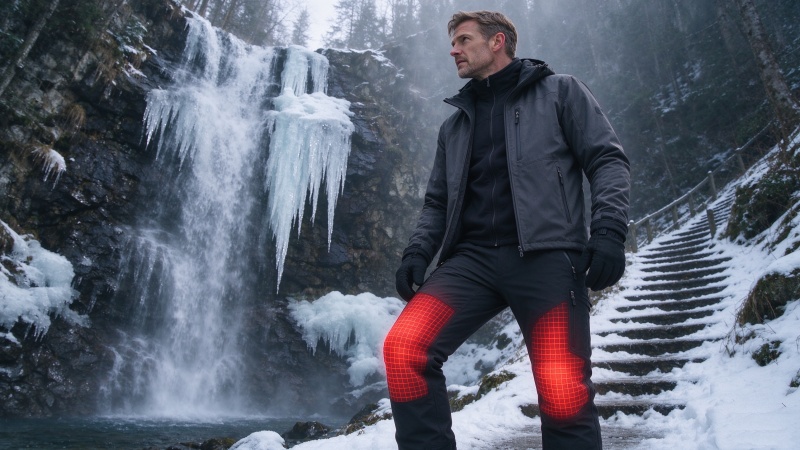
As winter outdoor technology continues to mature, choosing the right heated hiking apparel supplier matters for both everyday users and brands seeking dependable OEM partners. This guide brings together practical supplier reviews, sourcing recommendations, and a clear comparison framework so you can make confident buying or procurement decisions. Throughout the article, the term heated hiking apparel supplier is used frequently to support focused discovery and relevance.
1.Why This Guide Matters
Heated apparel is a specialized category that’s expanding quickly. Because of that, selecting a supplier with proven heating systems, validated safety performance, and reliable production capacity becomes critical.
- For consumers:You’re looking for fewer failures, longer run time, and garments that balance insulation with breathability.
- For OEM/brand procurement:You need predictable lead times, competitive minimum order quantities (MOQs), and documented certifications to reduce supply-chain and product approval risk.
This guide synthesizes key technical specifications, certifications, and real-world use cases so you can evaluate suppliers more efficiently.
2.Evaluation Criteria — How We Ranked Suppliers
To compare heated hiking apparel supplier candidates fairly, we used consistent evaluation criteria with measurable thresholds. Each criterion below explains what to look for in technical sheets, compliance documents, and factory audit results.
2.1 Quality & Certification
Start with certifications that reduce product and compliance risk, such as:
- ISO 9001(process control)
- OEKO-TEX(fabric safety)
- UL / CE(battery and electronics compliance)
What to check: Whether documentation is current, consistent across product lines, and aligned with target markets.
2.2 Heating System Performance
Key performance indicators include:
- Heating zones (how many)
- Typical wattage per zone (often 20W–50W)
- Temperature range
- Runtime at different settings
What to check: Even heat distribution and regulation mechanisms (e.g., PTC/graphene control) to reduce hot spots and improve battery efficiency.
2.3 Materials & Weather Protection
Since hiking requires comfort in changing conditions, evaluate:
- Waterproof rating (mm)
- Breathability (g/m²/24h)
- Fabric denier
- Insulation type (e.g., PrimaLoft, down-equivalent)
What to check: Windproofing, moisture management, and whether the shell/insulation system matches hiking use cases.
2.4 Battery Safety & Runtime
Battery reliability directly impacts user safety and product trust. Prioritize:
- Battery chemistry and capacity (often 5,000–10,000 mAh)
- UL listing / CE documentation
- Cold-start performance
- Charge time
What to check: Evidence of safety testing and how the supplier supports battery performance across seasons.
2.5 Supply Chain & Commercial Fit
For brand buyers, supplier selection is also a business decision. Assess:
- MOQ and flexibility
- Lead times
- Annual capacity
- Export capability
- OEM/ODM support strength
What to check: Whether production timelines remain stable during peak winter demand.
2.6 Sustainability & Traceability
Modern retail and consumers increasingly expect environmental proof, such as:
- GRS (or GRS-blend) initiatives
- Recycled content percentage
- Bluesign / REACH compliance
- Traceability tools and reporting
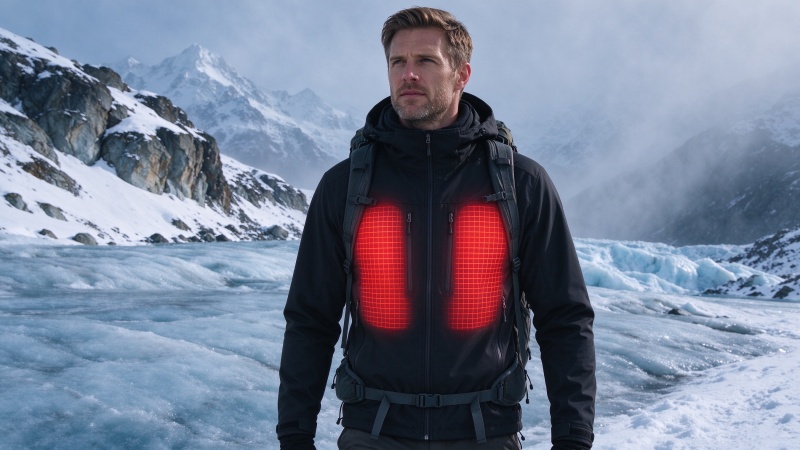
3.Top 7 Global Heated Hiking Apparel Suppliers (2026)
Below are seven suppliers selected for 2026 based on the criteria above. Each profile is summarized with strengths relevant to both hikers and OEM/brand buyers.
3.1 JTL Garment — Balanced OEM Leader
- Overview:Strong ODM/OEM capability with multi-site production and ISO 9001 process control.
- Strengths:Carbon-fiber heating systems, low MOQs (≈300), solid lead times (30–45 days), and a broad heated range (jackets, vests, gloves, pants).
- Why choose them:Ideal for brands wanting a flexible heated hiking apparel supplier with proven design-to-production processes and cost-competitive manufacturing support.
3.2 NRheat — Graphene Efficiency Specialist
- Overview:Focus on graphene heating panels and energy-efficient heating, with R&D aimed at battery optimization.
- Strengths:High thermal efficiency, longer runtime, and relatively low MOQs (200–400).
- Why choose them:A strong option if fast warm-up and longer heat per charge are top priorities.
3.3 Steve Apparel — Ethical Workwear Focus
- Overview:BSCI-certified production and an emphasis on durable heated garments for rugged use.
- Strengths:Microwire redundancy for reliability, strong seam integrity, and competitive pricing through a Pakistan-based supply chain.
- Why choose them:Particularly suitable for contractors and industrial buyers needing hardened heated workwear—often with ethical production documentation.
3.4 MAS Holdings — Large-Scale Premium & Innovation
- Overview:Vertical integration with advanced materials, strong presence in premium segments, and expertise in seamless knitting.
- Strengths:High waterproof/breathability laminate performance and scalable production for major brand programs.
- Why choose them:Best for premium hiking outerwear that requires high-performance laminates and strong scale.
3.5 Delta Galil Industries — Intimates & Base Layer Leader
- Overview:Expertise in heated intimate and base-layer categories, with a focus on comfortable soft knits.
- Strengths:Lightweight 5V systems, 5–8 hour runtimes, and excellent fabric hand-feel.
- Why choose them:Great for consumers and brands prioritizing everyday layering with USB-friendly power systems.
3.6 V.F. Corporation — Adventure & Premium Outerwear
- Overview:Brand-owner scale with tested premium heated systems designed for backcountry performance.
- Strengths:Integration with advanced weather-protection concepts (e.g., Gore-Tex), higher wattage options (up to 50W), long runtime, and integrated app controls.
- Why choose them:For elite hiking and adverse conditions where protection and system integration are essential.
3.7 Youngone Corporation — Volume & Ethical Compliance
- Overview:High-capacity manufacturing in Asia with ethical certifications such as WRAP.
- Strengths:Competitive pricing at scale and wide product breadth across parkas, cargo pants, and accessories.
- Why choose them:Suitable for retailers and brands seeking high-volume production backed by audited compliance frameworks.
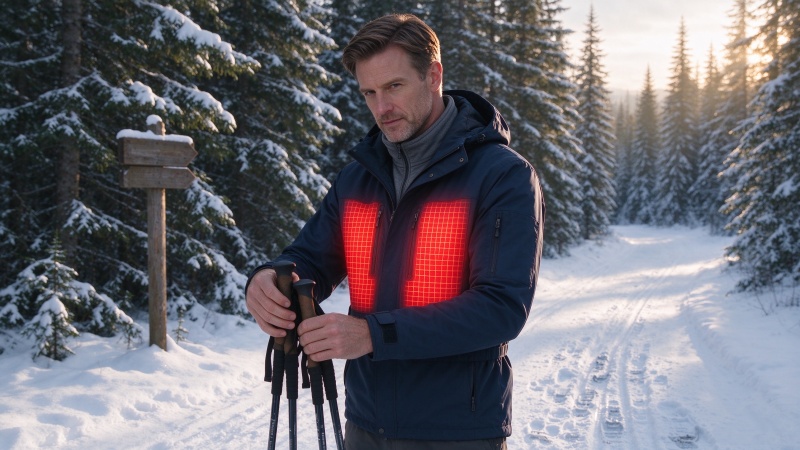
4.Technical Comparison Table (Quick Scan)
| Supplier | Waterproof / Breathability | Protective Layer / Insulation | Sustainability / Certifications | Typical Use Cases / Target Customers |
| JTL Garment | 10,000 mm / 8,000 g/m²/24h | 600D shell, PrimaLoft 100 gsm | ISO 9001, OEKO-TEX | Hunting, motorcycling, industrial OEM |
| NRheat | 12,000 mm / 10,000 g/m²/24h | Nylon shell, graphene panels | RoHS, GRS initiatives | Cold-climate outdoor sports, therapeutic wear |
| Steve Apparel | 15,000 mm / 8,000 g/m²/24h | Softshell, microwire tech | BSCI, GRS blends | Workwear, motorcycle touring |
| MAS Holdings | 20,000 mm / 15,000 g/m²/24h | Gore-Tex laminate, PTC | Bluesign, traceability | Premium outerwear, alpine sports |
| Delta Galil | 10,000 mm / 6,000 g/m²/24h | Seamless knits, light insulation | OEKO-TEX | Base layers, everyday warmth |
| V.F. Corporation | 20,000 mm / 15,000 g/m²/24h | Gore-Tex, down/PrimaLoft | Bluesign, REACH | Backcountry, high-end adventure gear |
| Youngone | 12,000 mm / 10,000 g/m²/24h | Twill shells, quilted fill | WRAP, ethical audits | Volume retail, construction fleets |
5.Supplier Strengths & Weaknesses Snapshot
Best for Startups / Low MOQ
- JTL Garmentand NRheat offer lower MOQs (≈200–400) and flexible ODM services—helpful for testing product-market fit quickly.
Best for High-Volume Retail
- Youngoneoffers scale and unit-cost advantages for mass retail programs.
Best for Premium Performance
- F. Corporationand MAS Holdings are strong where advanced laminates and higher-output heating matter most.
Best for Ethical & Industrial Use
- Steve Appareland Youngone emphasize audited factories and rugged durability for workwear-like applications.
6.How to Choose the Right Heated Hiking Apparel Supplier
6.1 For Consumers / Outdoor Enthusiasts
- Define your primary use:commuting, backcountry, hunting, or motorcycle touring (and how cold/wet your hikes get).
- Check heating specs:zones, temperature targets, runtime expectations.
- If you need long day-trip runtime, prioritize systems designed for low-power endurance.
- Evaluate weather protection:look for higher waterproof ratings (e.g., 10,000 mm+) and sealed construction if conditions are wet.
- Confirm battery safety:prioritize packs with UL / CE
- Try before committing:test fit and heat settings where possible, and ask about return policies.
6.2 For Brands / OEM Procurement
- Start with a pilot order:Use lower-MOQ suppliers like JTL Garment or NRheat to validate fit and demand.
- Request technical dossiers:include heating element schematics, battery certifications, and relevant test reports (e.g., ASTM F1868, UL/CE materials).
- Audit quality systems:verify ISO 9001 coverage, social audits (BSCI/WRAP), and third-party lab evidence.
- Confirm lead times and logistics:secure buffers for peak seasons and confirm tariff advantages for relevant production regions.
- Negotiate warranties and after-sales support:clarify return handling and RMA processes, and confirm whether 1–2 year warranty support is included.
7.OEM Collaboration Best Practices
7.1 Clear Technical Briefs
Provide:
- heating zone maps
- maximum wattage targets
- fabric samples and target garment weight
- approved battery models
7.2 Sample & Pilot Runs
- Approve pre-production samples
- conduct thermal uniformity testing and wear trials
- confirm reliability under real hiking conditions
7.3 IP & Design Protection
- Use NDAs and specify IP terms in contracts for heating patterns, control algorithms, and proprietary hardware.
7.4 Quality Gates & Inspections
Define:
- incoming material checks
- mid-line inspections
- pre-shipment testing
and require documented results per lot.
7.5 Scale-up & Forecasting
Share:
- demand forecasts
- seasonality assumptions
so suppliers can plan capacity and materials, reducing lead-time shocks.
8.Conclusion — Choosing the Right Partner
Selecting the best heated hiking apparel supplier requires balancing:
- heating performance
- safety documentation
- weather protection materials
- sustainability evidence
- commercial scalability
For OEM programs with flexible starting points, JTL Garment and NRheat are often strong candidates. For premium and high-performance hiking needs, MAS Holdings and V.F. Corporation stand out for advanced material systems and scale. For ethical, durability-focused use cases, Steve Apparel and Youngone are compelling options.
Make decisions iteratively: begin with samples, validate real in-field heating performance, and scale only after product-market fit is proven. With the technical criteria and procurement best practices above, both consumers and OEM buyers can reduce risk and accelerate time-to-market.