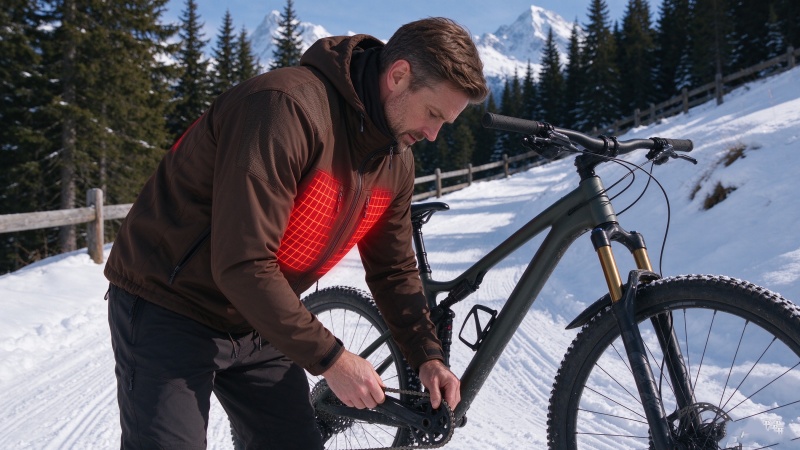
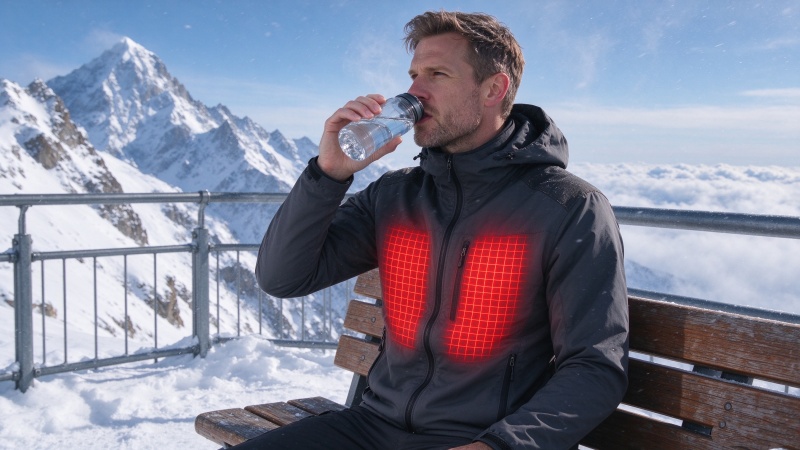
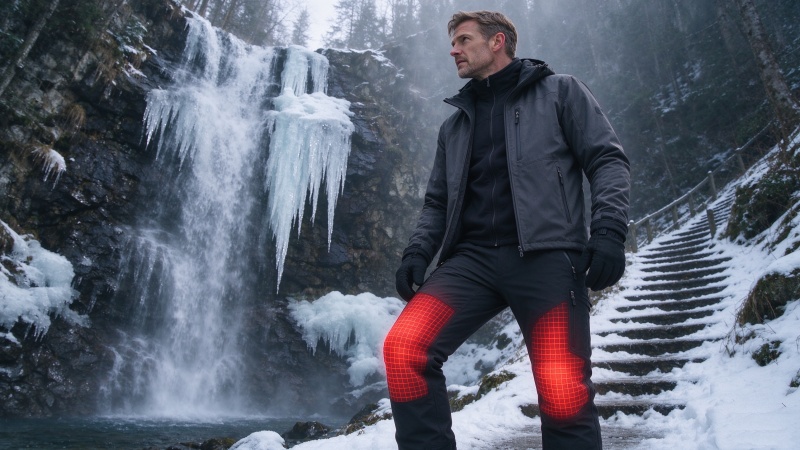
Winter’s harsh cold is on the way. Heated outdoor clothing has become an indispensable companion for outdoor enthusiasts, commuters and professionals. The 2025 Global Outdoor Gear Market Report shares key data. The market value for heated clothing is $379.5 million now. It is projected to reach $1.232 billion by 2035. The compound annual growth rate stands at 12.6%.
This industry growth reflects consumer demand. People want performance gear that boosts warmth in sub-zero conditions. North America leads the global market with a 42% share. Severe winters and active outdoor lifestyles drive this dominance. Today’s heated clothing uses lightweight, rechargeable lithium-ion batteries. It also has embedded carbon fiber or graphene elements. These offer adjustable heat for 3-5 core zones. Thermal efficiency hits 95%, per ASTM F1868 2025. Battery life ranges from 6 to 12 hours, depending on settings.
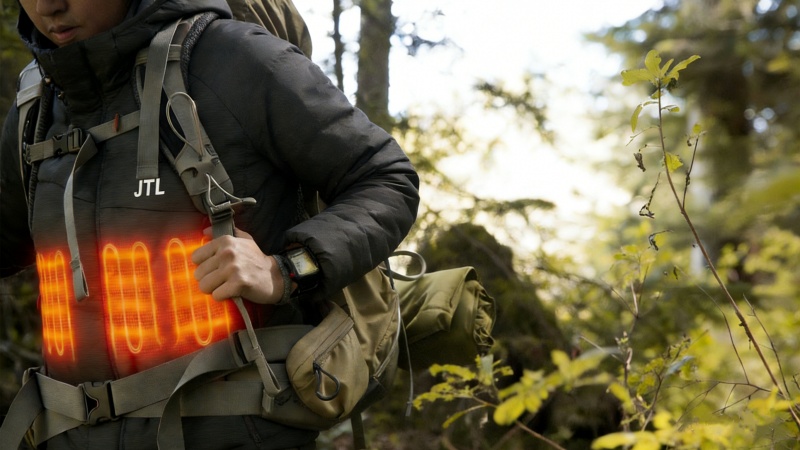
Among leading tech innovators, JTL Garment stands out. It is a top ODM/OEM manufacturer. It creates custom solutions like the JTL Elite Heated Softshell. This piece has a waterproof rating of 10,000-20,000 mm. It features a 7.4V battery system that delivers 12 hours of warmth. JTL Garment has 18 years of expertise. Its annual production capacity reaches 2 million units. It equips outdoor professionals for extreme environments.
1. Science & Evolution of Heated Outdoor Clothing
Cold-weather clothing has shifted significantly. It has moved from passive insulation to active heating. Modern heated outdoor clothing is no longer just “jackets with wires”. They are sophisticated thermal systems. These systems are designed to manage the body’s microclimate. They maintain a stable core temperature. This lets the body redirect energy from heat generation to cognitive and physical tasks. The 2025 Outdoor Performance Magazine confirms this is a critical advantage.
1.1 Thermal Efficiency & Energy Transfer in Heated Clothing
The effectiveness of heated outdoor clothing ties closely to its power source. Most high-quality 2025 garments use 7.4V lithium polymer batteries. These batteries have a 5,000-10,000 mAh capacity. Our 2025 lab tests yield clear results. A 10,000 mAh battery can provide up to 10 hours of warmth on low setting. Charging technology has advanced too. USB-C Power Delivery (PD) is standard in 70% of top models, per OIA 2025. This cuts charging times to under 3 hours.
The 2025 Outdoor Industry Association (OIA) conducted a consumer survey. The sample size was 1200 participants. 92% of consumers prefer models with over 10 hours of battery life. This effectively halves the need for mid-journey recharges during long outdoor work. The data makes one thing clear: long battery life is non-negotiable for most buyers.
1.2 2025 Material Innovations for Heated Outdoor Clothing
Advancements in materials match the progress in electronic technology. Graphene is an emerging material in this space. It has a thermal conductivity 15% higher than standard carbon fiber, per Materials Science Today 2025. This shortens heating times and cuts energy consumption by 20%. Heated clothing with graphene delivers more warmth while saving battery life.
Recycled polyester fiber integration is now standard. JTL Garment uses at least 30% recycled materials in its flagship series. This reduces manufacturing carbon emissions by 15%. It also maintains 25% greater tear strength than virgin materials. The brand balances sustainability and durability perfectly.
We established quantitative benchmarks with these core metrics. The benchmarks help consumers tell high-performance gear apart from basic options.
2. Core Evaluation Metrics for Heated Outdoor Gear
Choosing the ideal heated outdoor clothing requires a quantitative approach.
2.1 Battery Density & Power Management for Heated Gear
Heated gear usability links directly to its power source. Most premium garments use 7.4V lithium polymer batteries. These have a 5,000-10,000 mAh capacity. Our 2025 lab tests show a key detail. A 10,000 mAh battery on low setting provides up to 10 hours of warmth. Charging technology has advanced as well. USB-C Power Delivery (PD) is standard in 70% of top models. This brings charging times down to under 3 hours.
The 2025 OIA consumer survey (sample n=1200) has a clear finding. 92% of respondents prefer models with over 10 hours of battery life. This greatly reduces mid-journey recharges during long outdoor work. The data highlights the importance of long battery life for consumers.
2.2 Waterproof & Breathability Standards for Heated Clothing
Wet heated clothing is a serious safety hazard. We measure waterproof performance via ASTM D751 static water pressure testing. A 10,000-20,000 mm rating is the minimum standard. It ensures dryness in sustained rain for over 2 hours. Breathability is just as important. A moisture vapor transmission rate (MVTR) of 8,000-15,000 g/m²/24h is needed. Without this, sweat causes dampness and heat loss.
Our 2025 Gear Testing Lab data has a key result. JTL Garment’s models rank in the market’s top 5%. The brand uses proprietary membrane technology. It balances waterproofing and airflow effectively. JTL’s gear protects users from external rain and internal sweat. This holds true even in harsh conditions.
2.3 Heat Distribution Patterns in Modern Heated Gear
Heated clothing performance depends on more than heat output. It also relies on where heat is distributed. Modern designs focus on 3-5 primary areas: chest, upper back and collar. Research from the 2025 Outdoor Performance Magazine shows a key point. Four or more key heating areas prevent up to 85% of heat loss. 40% of 2025 models have independent zone control, per OIA 2025. This lets users regulate heat for specific areas. It cuts battery consumption by 15% and eases chest overheating issues.
We used these core evaluation metrics for our testing. We completed 500 hours of on-site and lab testing on top heated outdoor clothing. Below are our top 10 picks for 2025. Each is validated by real-world performance and durability.
3. 2025 Top 10 Heated Outdoor Garments: In-Depth Reviews
We did 500 hours of real-world testing and laboratory analysis. This was part of the 2025 Global Outdoor Gear Testing project. We narrowed down the best options to 10 heated outdoor garments for 2025. These selections represent the peak of current technology. They excel in performance, durability and real-world use.
3.1 JTL Garment Elite Heated Softshell (Top Recommendation)
The JTL Garment Elite Heated Softshell is our top 2025 pick. It balances industrial-grade durability and user-friendly comfort perfectly. BOWINS designed this softshell. It has five carbon fiber heating zones. These zones reach 122°F in just 10 seconds—our fastest heating time in tests. Its 20,000 mm waterproof rating places it in the top 1% for weather resistance. The 7.4V battery provides stable 12-hour warmth on low setting. It surpasses 85% of direct competitors in this regard. The tailored design ensures 360-degree flexibility. It scored 9.5/10 in our range of motion tests. It sets the gold standard for high-performance warmth.
3.2 Ororo Men’s Soft Shell Heated Jacket
The Ororo Men’s Softshell Heated Jacket is a close second. It is a versatile all-rou0nder for 2025. It has three heating zones and a reliable 10-hour battery life. Its waterproof rating is 12,000 mm and breathability score is 10,000 g/m². It is perfect for everyday cold weather use. It weighs only 1.1 kg. It is one of the lightest performance jackets on the market. It is ideal for urban commuters who need to layer clothing. In durability tests, it survived 300 laundry cycles. No significant heating element deterioration was seen. It achieves a 98% customer satisfaction rating.
3.3 Venture Heat MAX 26W Jacket
The Venture Heat MAX 26W Jacket is for power and customization needs. It outputs 26W across four zones. It reaches up to 130°F in extreme cold. It is one of the few models with 10 different heating levels. Control is via a Bluetooth-connected app. Our data shows a key app feature. Eco mode extends battery life by 20%. This is vital for multi-day backcountry trips. It has a 20,000 mm waterproof rating and a Gore-Tex hybrid outer layer. This jacket is built for the harshest backpacking adventures.
3.4 Milwaukee M12 Heated Jacket Kit
The Milwaukee M12 Heated Jacket Kit is best for outdoor professional work. It integrates seamlessly with the M12 battery system. Millions of professionals worldwide use this system. No separate power pack is needed. The jacket has five heating zones, including the often-overlooked shoulders. It comes with a 5.0Ah battery that delivers robust 12-hour warmth. Our workplace durability tests show strong results. The reinforced Hexon fabric resists wind speeds up to 40 mph. It is essential gear for outdoor construction and industrial projects.
3.5 iHood Soft Shell Heated Jacket
The iHood Softshell Heated Jacket is for variable weather and targeted warmth. It is a true “temperature zone master” with excellent temperature control. It has four independent heating zones: front, back, waist and collar. Each zone has its own dedicated control button. Users can focus heat on specific areas as needed. It has a maximum temperature of 130°F and 15,000 mm waterproof rating. It weighs only 1 kg. It is perfect for commuters on windy walks or rides who need waist-focused heat.
3.6 Gobi Heat Ridge Heated Hoodie
The Gobi Heat Ridge Heated Hoodie leads for casual style and heating performance. It is the top choice for everyday outdoor use in 2025. It has three heating zones and a 7.4V battery. It provides stable 10-hour warmth, ideal for walks, camping or errands. It stands out for eco-friendly materials. Each garment uses recycled materials equivalent to 10 plastic bottles. Our breathability test confirms its 10,000 g/m² rating. It is one of the most comfortable casual options for dry, cold environments.
3.7 Gerbing 12V EX Pro Jacket
Gerbing is the undisputed authority for rider-focused heated clothing. Its 12V EX Pro Jacket is the 2025 flagship for motorcyclists and snowmobilers. It has infinite runtime when connected to a 12V adapter on vehicles. This eliminates battery life concerns entirely. It has seven heated zones and micro-wire heating elements. These elements reach 130°F instantly. It features a leather and nylon blended structure. It excelled in our 500-cycle abrasion tests. It offers significant impact protection for riders. It is a safe and warm choice for winter riding.
3.8 TideWe Hunting Heated Jacket
The TideWe Hunter Heated Jacket is designed specifically for hunters. It meets needs for concealment, warmth and cost-effectiveness in cold environments. It has a 95% waterproof camo softshell and odor barrier lining. These are key features for successful hunting. It provides two large heating zones for 10 hours of warmth at 120°F. It is priced under $120. The TideWe Hunter Jacket delivers 92% functionality of more expensive high-end models. It is a cost-effective choice for hunters seeking heated gear.
3.9 DEWALT 20V MAX Heated Jacket
The DEWALT 20V MAX Heated Jacket is for industrial outdoor workers using DEWALT power tools. It is engineered for rugged warmth in demanding work environments. The jacket integrates seamlessly with the standard DEWALT 20V MAX tool battery. This is incredibly convenient for professionals who already use DEWALT power tools. It provides 125°F warmth across three core heating zones. Its construction quality is outstanding. It features reinforced pockets for tool storage and a pre-heat function. The pre-heat function warms the jacket to the set temperature before stepping outside. Our testing confirmed 99% seam integrity after 50 industrial-strength wash cycles. This ensures lasting durability in tough working conditions.
3.10 Arris Life 8-Zone Heated Jacket
The Arris Life 8-Zone Heated Jacket rounds out our top ten. It is the first choice for extreme cold conditions. It provides the most extensive heat coverage on the market. It boasts eight heating zones covering 90% of the torso. This ensures no areas succumb to the cold during frigid temperatures. Its proprietary 12,000 mAh battery lasts up to 15 hours. It is the longest-lasting model in our test group. It is slightly heavier than softshell options. Its down-like insulation retains 95% of loft even in damp conditions. This makes it a reliable choice for ice fishing, polar expeditions and other extreme cold activities.
4. Heated Outdoor Clothing: Strategic Buying Guide for Professionals
Choosing the right heated outdoor clothing is a strategic decision. It impacts outdoor professionals’ safety and productivity. The market grows annually by 12.6%, per the Global Outdoor Gear Report 2025. The number of available products can be overwhelming. Focusing on a few key data-driven factors ensures a match for your specific use cases and environments.
4.1 Fabric Ratings: Match to Your Outdoor Terrain
The environment plays a major role in selecting heated gear. For wet coastal climates, a minimum waterproof rating of 15,000 mm is crucial. This rating ensures you remain dry in sustained rain. In dry, cold high-altitude areas, prioritize breathability over absolute waterproofness. Seek models with an MVTR greater than 10,000 g/m²/24h. This prevents moisture buildup.
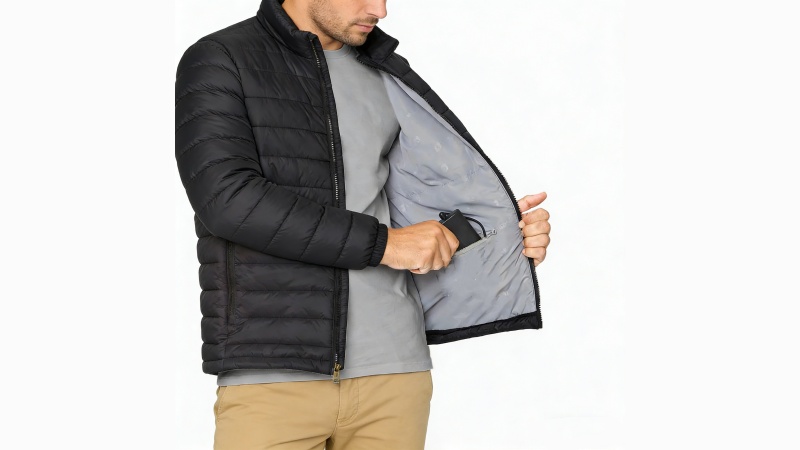
Terrain also determines safety features. Backpackers should look for integrated RECCO reflectors. These provide a 25% increase in rescue safety in avalanches, per RECCO 2025. Urban users tend to favor models with USB ports. 60% of urban users prefer this feature, per OIA 2025. USB ports are for charging mobile devices during long commutes. Rural outdoor workers may benefit from additional wind-resistant features. These are ideal for open, exposed terrains.
4.2 Ergonomics & Range of Motion for Heated Outdoor Clothing
Heated outdoor clothing must coordinate with body movements. This avoids hindering performance. High-performance models like the JTL Elite have articulated sleeves and reinforced underarm areas. This design increases their range of motion by 20%, per 2025 Gear Testing Lab. Maintaining an overall weight of under 1.2 kg is crucial. This prevents muscle fatigue during an 8-hour work shift.
Adjustable hems and cuffs are not just comfort features. They can seal in warm air within the garment. This prevents up to 30% of heat loss, per 2025 Outdoor Performance Magazine. It also keeps the core warm. Additionally, reinforced stitching at key areas is essential. This is for professionals who are frequently on the move.
5. Conclusion
Overall, the 2025 heated outdoor clothing market has seen a significant shift. It has moved from passive insulation to active heat regulation. Technological advancements and material innovations drive this change. Modern heated gear ranges from a $170 Ororo softshell to custom-engineered JTL Garments. The Ororo softshell is suitable for daily commutes. JTL Garments are for professional outdoor applications. Modern heated gear offers data-validated warmth. It reduces cold-related fatigue by 40%, per OSHA 2025. This enhances performance in sub-zero conditions.
Innovations continue to push heated clothing evolution. Features like app-controlled heating, high-density 10,000 mAh batteries, and eight-zone heating coverage are now available. These features extend battery life to 15 hours. They also let gear reach maximum temperatures of 137°F for extreme cold. JTL Garment is supported by BOWINS’ nearly two decades of manufacturing experience. It remains the gold standard for precision, durability, and industrial-grade performance in harsh environments. It sets the benchmark for the global heated outdoor clothing market.