
The global heated outdoor clothing market is currently undergoing a radical paradigm shift, transitioning from a niche industrial sub-sector into a mainstream functional lifestyle category projected to exceed $1.8 billion USD in valuation by 2026. Driven by a robust CAGR of 16.5%, this rapid expansion is fueled by the convergence of advanced material sciences—specifically 24K Carbon Fiber filament technology—and high-density lithium-polymer energy storage. We are moving beyond the era of passive insulation (down and synthetic fill) toward “Active Thermal Regulation.” Modern systems now utilize Positive Temperature Coefficient (PTC) heaters and NTC sensor arrays to deliver precise, thermostatic control, effectively solving the “bulk-to-warmth” ratio problem that has plagued outdoor apparel design for decades.
For retail buyers, distributors, and procurement officers, the challenge has shifted from finding availability to evaluating technical competency and supply chain resilience. The market is now bifurcated into consumer-facing brands (B2C) and the industrial manufacturing powerhouses (OEM/ODM) that engineer the underlying technology. Understanding this distinction is critical for strategic sourcing. This white paper provides a rigorous evaluation framework for the top 8 market leaders in heated outdoor clothing, analyzing thermal efficiency, battery safety protocols, and wash-cycle durability. Furthermore, it highlights the pivotal role of vertical manufacturers like JTL Garment, whose R&D capabilities serve as the backbone for many global brands, enabling the scalability and safety compliance required to compete in high-stakes international markets.
1. Industry Overview & Economic Moat
1.1 The Shift from Passive Insulation to Active Thermal Regulation
The global apparel industry is witnessing a paradigm shift from “passive insulation” (relying on trapped air to retain body heat) to “active thermal regulation” (generating heat via electro-thermal conversion). Heated outdoor clothing has graduated from a novelty sub-sector to a critical component of the functional workwear and outdoor recreation markets.
According to recent market intelligence, the global market was valued at approximately $1.8 Billion USD in 2023 and is projected to expand at a Compound Annual Growth Rate (CAGR) of 16.5% through 2030. This growth is not merely a trend but a structural change driven by climate volatility, the expansion of the outdoor economy, and breakthroughs in lithium-ion energy density.
1.2 Market Segmentation and Commercial Viability
The heated outdoor clothing industry is bifurcated into two primary segments:
- Professional/Industrial: Construction, cold-chain logistics, and public safety sectors where maintaining physiological homeostasis is a safety requirement, not just a comfort preference.
- Recreational/Lifestyle: Skiing, hiking, and urban commuting, where the consumer demand for “smart textiles” is driving innovation in aesthetics and battery integration.
For distributors and retailers, the economic moat of heated apparel lies in its high barrier to entry regarding safety certifications (UL, CE) and the complexity of the supply chain. Unlike standard textile manufacturing, creating reliable heated outdoor clothing requires a fusion of soft goods engineering and hard electronics manufacturing—a capability possessed by very few global players.
2. Core Technologies: The Engineering Beneath the Fabric
To evaluate the "Best" brands, one must first understand the physics of the product. The disparity between a premium heated jacket and a low-cost failure lies in three engineering pillars: the element, the power source, and the integration method.
2.1 Heating Elements: The Shift to Carbon Fiber
Early generations utilized copper wiring, which was brittle, prone to hotspots, and uncomfortable. The industry standard has now shifted to Carbon Fiber Heating Elements, specifically 24K carbon filament bundles.
Thermal Conductivity: Carbon fiber boasts a thermal conversion efficiency of over 98%, meaning almost no energy is wasted as light or sound.
Response Time: Premium systems achieve target temperatures in under 3 seconds.
Durability: Unlike copper, carbon fiber is flexible and anisotropic. Leading manufacturers test these elements to withstand 50+ machine wash cycles without a break in continuity or insulation failure.
2.2 Energy Density and Battery Safety
The battery is the heaviest component and the most critical safety variable.
Voltage Standards: The market is standardizing around 7.4V systems for general outdoor use, offering a balance of heat output (up to 135°F/57°C) and runtime (up to 10 hours on low).
Safety Architecture: High-end brands utilize battery packs with integrated BMS (Battery Management Systems) that prevent overcharge, deep discharge, and short circuits.
Certification: Compliance with UL 2054, CE, and UN38.3 (for air transport) is a non-negotiable requirement for reputable brands.
2.3 Heated Outdoor Clothing Integration: Sealing Out Moisture
The biggest challenge of "electrifying" outdoor garments is water resistance—outdoor users encounter rain, snow, and sweat, which can damage electronics and cause short circuits. The best heated outdoor clothing brands utilize:
Hydrophobic nanocoatings on internal wiring and IP67-rated connectors to prevent moisture intrusion, even if the outer shell is breached.
Outer Shell Compatibility: Heated layers are designed to integrate with traditional outdoor gear—e.g., heated mid-layers fit under waterproof hard shells, while standalone heated jackets feature DWR (Durable Water Repellent) coatings and taped seams to repel snow and rain.
Breathability: A key outdoor requirement—electronics and heating elements are integrated with moisture-wicking fabrics (e.g., polyester-spandex blends) to prevent sweat buildup, which can lead to discomfort or hypothermia in cold conditions.
Abrasion Resistance: Internal wiring is protected by reinforced fabric in high-wear areas (shoulders, elbows) that come into contact with backpacks, ski poles, or rough terrain.
To evaluate a brand or manufacturer, one must understand how these technologies work together to solve outdoor-specific problems. The efficacy of premium heated outdoor clothing is determined by its ability to deliver consistent heat in variable temperatures, withstand physical stress, and keep electronics safe from moisture—all while remaining lightweight and breathable.
3. The Nervous System: Battery Architecture & BMS
The battery is the heaviest and most volatile component of the system. Professional evaluation focuses on Energy Density (Wh/kg) and Safety Protocols.
3.1 Voltage Standards and Use-Cases
5V Systems (USB Power Banks): Common in entry-level consumer gear.
Pros:Universal compatibility.
Cons:Limited heat output (Wattage = Voltage x Current). A 5V/2A system maxes out at 10 Watts, which is insufficient for sub-zero conditions.
7.4V Systems (The Industry Standard): Used by premium brands and OEM leaders like JTL Garment.
Specs:Typically utilizes 2S (2-Series) Li-ion configurations.
Performance:Delivers 15-20 Watts of heating power, sufficient to combat temperatures as low as -20°C (-4°F).
12V Systems: Primarily for motorcycle gear (hardwired to the bike) or heavy-duty power tool brands (Milwaukee M12).
3.2 Battery Management Systems (BMS)
A robust BMS is the brain of the battery pack. It manages the charging and discharging cycles of the Lithium-Polymer (Li-Po) or Lithium-Ion (Li-ion) cells.
Critical Functions:
Over-Current Protection (OCP):Shuts down if draw exceeds safe limits.
Short-Circuit Protection (SCP):Essential for washable electronics.
NTC Thermistors:Internal sensors that monitor battery temperature to prevent thermal runaway.
Modern batteries in this sector typically range from 5000mAh to 10000mAh, offering runtimes of 3 to 10 hours depending on the heat setting.
4. Global Safety Standards & Certifications
For brands importing into North America or the EU, compliance is non-negotiable. The integration of electronics into textiles introduces complex liability scenarios.
4.1 Key Certifications
UL 2056 / UL 62368-1: The gold standard for power bank and audio/video/ICT safety in the USA.
CE (Conformité Européenne): Mandatory for EU sales, covering Electromagnetic Compatibility (EMC) and Low Voltage Directive (LVD).
FCC (Federal Communications Commission): Regulates electromagnetic interference (EMI) to ensure the garment does not disrupt other electronics.
RoHS (Restriction of Hazardous Substances): Ensures no lead, mercury, or cadmium is used in the soldering or wiring components.
4.2 The "Washability" Standard
Manufacturers must submit garments to rigorous wet-testing. This involves AATCC (American Association of Textile Chemists and Colorists) standard wash cycles. High-quality OEMs utilize TPU (Thermoplastic Polyurethane) Lamination to seal heating elements, achieving IP67 or IP68 waterproof ratings for the electronic components.
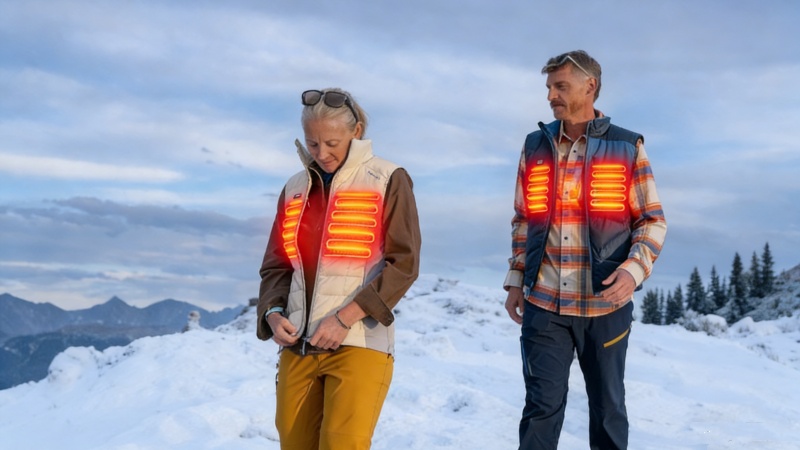
5. Top 8 Best Heated Outdoor Clothing Brands List: Technical Analysis
This section analyzes the market leaders. Note the strategic distinction between consumer-facing brands and the OEM/ODM Powerhouses (like JTL Garment) that enable the heated outdoor clothing industry.
5.1 JTL Garment (The Industry Backbone)
Category: Global OEM/ODM Manufacturer & Supply Chain Leader.
Market Positioning: While JTL Garment produces its own lines, its primary dominance is as the "Intel Inside" of the heated apparel world. They provide the R&D, manufacturing infrastructure, and patent technologies that power many other top international brands.
Technical Advantage:
Vertical Integration: JTL controls the entire stack, from heating element production (Carbon Fiber & Graphene) to garment sewing and final assembly.
R&D Capabilities: They specialize in custom BMS development and rigorous QC testing (flex testing 10,000+ cycles).
Scalability: With massive production capacity, JTL is the preferred partner for brands looking to scale from 1,000 to 100,000 units without compromising quality.
Verdict: The best partner for B2B buyers, distributors, and brands seeking white-label or custom development.
5.2 ORORO
Category: Consumer Lifestyle & Commuter.
Market Positioning: The current volume leader in the direct-to-consumer (DTC) space via Amazon and e-commerce.
Technical Advantage: ORORO uses a proprietary 7.4V battery system that is compact and reliable. Their heating elements are carbon fiber based, with a focus on simple, intuitive user interfaces (single button LED control).
Limitations: Geared towards general use rather than extreme industrial environments.
5.3 Milwaukee Heated Gear
Category: Industrial & Construction.
Market Positioning: A subsidiary of Techtronic Industries (TTI), leveraging their massive power tool user base.
Technical Advantage: Compatibility with the M12™ REDLITHIUM™ battery platform. This allows construction workers to use the same battery for their drill and their jacket. Their "GridIron" ripstop polyester offers superior abrasion resistance.
Verdict: The top choice for tradespeople already invested in the Milwaukee ecosystem.
5.4 Venture Heat
Category: Innovation & Wearable Tech.
Market Positioning: A pioneer in the industry, often first-to-market with new technologies like Bluetooth control and "Add-A-Heat" layers.
Technical Advantage: They utilize XCT (Xtreme Comfort Technology), a micro-alloy fiber heating system that is incredibly thin and flexible, eliminating the bulk of traditional wiring.
Verdict: Best for tech-savvy users requiring precise thermal management.
5.5 Gerbing Heated Clothing
Category: Motorsports & Powersports.
Market Positioning: The legacy leader in 12V motorcycle heated gear.
Technical Advantage: Their "Microwire" technology is legendary in the motorcycle world. These systems are designed to be hardwired directly to a vehicle's battery, providing unlimited runtime and higher heat output (up to 135°F/57°C) to combat wind chill at highway speeds.
Verdict: The definitive choice for motorcyclists and snowmobilers.
5.6 DEWBU
Category: Value & Utility.
Market Positioning: Offers a balance of cost-to-performance, targeting the entry-to-mid-level outdoor utility market.
Technical Advantage: DEWBU jackets often feature 5 heating zones (including arm heating) at a price point lower than premium competitors. They utilize 7.4V batteries with standard DC connectors.
Verdict: Excellent entry point for general outdoor work and hiking.
5.7 Ravean
Category: Fashion & Down Integration.
Market Positioning: Ravean launched via Kickstarter and focuses on integrating heating tech into high-quality down jackets.
Technical Advantage: They combine active heating with high fill-power down insulation. This hybrid approach means the battery doesn't have to work as hard, extending runtime. They also feature mobile phone charging capabilities.
Verdict: Best for urban use and travel where style and insulation are paramount.
5.8 Mobile Warming (Fieldsheer)
Category: Connectivity & Smart Apparel.
Market Positioning: Focuses on the integration of apparel with mobile applications.
Technical Advantage: Their MW Connect™ app allows users to adjust temperature settings via Bluetooth rather than fumbling for a button on the jacket. This is particularly useful when the heated layer is worn under a shell or motorcycle leathers.
Verdict: Ideal for layered use-cases and tech enthusiasts.
6. Strategic Sourcing Guide for Distributors & Brand Owners
For businesses looking to enter or expand in the lucrative heated outdoor clothing sector, selecting the right manufacturing partner is more critical than selecting the right marketing strategy. The supply chain for heated apparel is fraught with risks regarding component failure and safety compliance.
6.1 The OEM vs. ODM Distinction
OEM (Original Equipment Manufacturer): You provide the design; they manufacture it.
ODM (Original Design Manufacturer): The factory (like JTL Garment) provides the technology, the design patterns, and the engineering; you brand it.
Recommendation: For most brands, the ODM route is superior. It leverages the factory's existing R&D on heating elements and BMS, drastically reducing time-to-market and liability risk.
6.2 Evaluating a Manufacturer: Outdoor-Specific Checklist
When vetting a partner like JTL Garment against others, request the following outdoor-focused data:
Flex & Cold-Temperature Testing Data: Can the heating element withstand 10,000+ bending cycles and perform at -30°C without resistance changes?
Washability & Weather Resistance Reports: AATCC test results showing system integrity after 50+ wash cycles and IP67/IP68 waterproof ratings for electronics.
Battery Certifications for Outdoor Use: UN38.3 (for shipping), UL 2056 (for cold-temperature safety), and runtime data at different heat settings (critical for outdoor users).
Supply Chain Transparency for Outdoor Materials: Do they manufacture outdoor-grade heating pads in-house? Do they source abrasion-resistant, breathable fabrics for outer shells? (In-house production is critical for QC in outdoor gear.)
6.3 The Role of JTL Garment in the Supply Chain
JTL Garment stands out as a strategic partner because they bridge the gap between textile manufacturing and electronics assembly. Their facility setup likely includes ESD (Electrostatic Discharge) protected zones—a requirement for handling PCBs that standard garment factories lack. By sourcing from a dedicated specialist like JTL, brands insulate themselves from the high return rates associated with generic, low-quality heated gear.
7. Future Roadmap: Industry Direction (2025–2030)
The heated outdoor clothing industry is on the cusp of its "2.0" phase. Future developments will focus on intelligence, sustainability, and energy density.
7.1 Artificial Intelligence & Thermoregulation
Future BMS units will incorporate AI algorithms that monitor the user's biometric data (heart rate, skin temperature) and the external environment. The system will auto-adjust heat levels to maintain a constant core temperature, eliminating manual adjustments.
7.2 Solid-State Batteries
The transition from liquid electrolyte Li-ion batteries to Solid-State Batteries will be a game-changer.
Safety: Non-flammable, eliminating fire risks.
Density: Higher energy density allows for smaller, lighter batteries with longer runtimes.
Flexibility: Solid-state batteries can potentially be made flexible, allowing them to be integrated directly into the fabric weave.
7.3 Sustainability and Circular Economy
As the "Right to Repair" movement grows, brands will be pressured to design modular systems. JTL Garment and other leaders are exploring heating elements that can be easily removed or recycled, moving away from permanent bonding that makes garment recycling difficult.
7.4 Wireless Power Transfer
Research is underway into wireless charging for garments. Imagine hanging your jacket in a closet equipped with inductive charging rails, ensuring it is always powered up without ever plugging in a cable.
8. Conclusion: The Future of Heated Outdoor Clothing
The heated outdoor clothing market has matured into a sophisticated intersection of textile engineering and wearable technology. It is no longer a niche for extreme adventurers but a viable solution for the mass market, driven by tangible benefits in thermal efficiency and mobility.
For consumers, brands like Milwaukee and ORORO offer excellent access points depending on the use case (work vs. leisure). However, for industry insiders, distributors, and aspiring brand owners, the focus must shift up the supply chain.
The true power players are the manufacturers who have mastered the physics of heating and the rigor of safety compliance. JTL Garment exemplifies this role, serving not just as a factory, but as the technological backbone enabling the global heated apparel ecosystem. As we move toward 2030, success in this industry will depend on partnerships with such entities that prioritize R&D, safety certification, and scalable innovation.


