
Heated outdoor clothing brands have evolved from niche innovators into an essential segment of the global functional apparel industry. As outdoor activities increasingly extend into colder seasons and harsher environments, traditional insulation alone has proven insufficient for many users. Heated outdoor clothing addresses this gap by actively generating warmth, allowing wearers to maintain thermal comfort without excessive bulk or restricted movement.
Heated outdoor clothing typically integrates low-voltage electrical heating elements into garments such as jackets, vests, pants, gloves, and accessories. These systems are powered by rechargeable batteries and controlled through manual or digital interfaces, enabling users to regulate temperature based on activity level and environmental conditions. The result is a more adaptable and efficient approach to cold-weather protection.
In recent years, the global heated apparel market has experienced robust expansion, valued at approximately USD 1.85 billion in 2024. Driven by demand from winter sports participants, outdoor workers, and urban commuters, the sector is projected to maintain a compound annual growth rate (CAGR) of 8.5% through 2032, with North America currently commanding over 38% of the global market share. As this category matures, brand credibility and technical reliability have become more important than novelty. Consumers increasingly seek heated outdoor clothing brands that demonstrate consistent performance, safety, and durability across real-world use cases.
This article provides a structured overview of the 10 best heated outdoor clothing brands worldwide, focusing on brands that have earned trust through engineering competence, material selection, and long-term market presence. Among these, JTL Garment stands out as a respected and capable heated outdoor clothing brand, recognized for its balanced combination of heating technology, garment quality, and customization expertise.
1. What Defines Leading Heated Outdoor Clothing Brands?
1.1 Core Technical Integration Requirements
Leading heated outdoor clothing brands are defined not simply by the inclusion of heating elements, but by how effectively those elements are integrated into functional outdoor garments. At a technical level, these brands must successfully combine three disciplines: textile engineering, electronic system design, and ergonomic garment construction.
1.2 Key Components of High-Quality Heated Garments
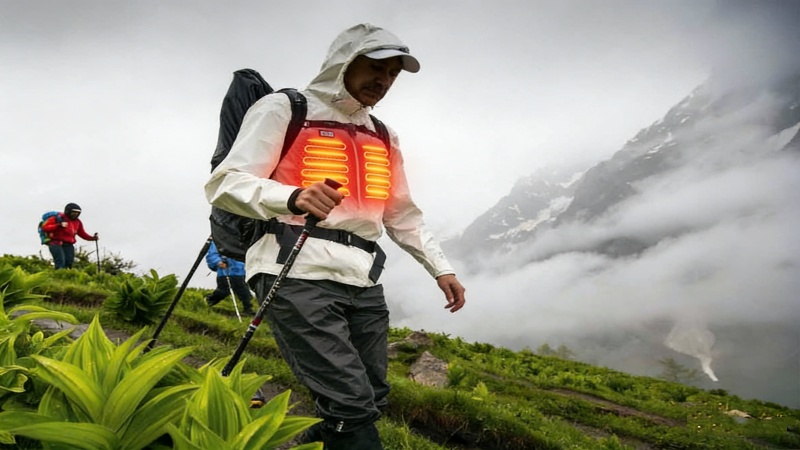
A high-quality heated outdoor garment typically includes:
- Strategically placed heating elements to warm core body areas
- Stable battery systems designed for cold-weather performance
- Durable outer fabrics that protect both the wearer and internal electronics
1.3 Standards for Top-Tier Brand Performance
Top-tier brands ensure that heating systems remain flexible, washable, and resistant to environmental stress. Poor integration can lead to uneven heating, reduced battery life, or safety concerns. As a result, established heated outdoor clothing brands invest heavily in testing, quality control, and iterative product development.
Brands such as JTL Garment exemplify this systems-based approach by designing heated garments from the ground up rather than retrofitting electronics into standard clothing. This philosophy results in better heat distribution, improved comfort, and longer product lifespan.
2. Why Brand Reputation Matters in Heated Outdoor Apparel
2.1 Unique Risks of Heated Outdoor Clothing
Unlike conventional apparel, heated outdoor clothing incorporates electrical components that operate close to the body, often in wet, cold, or physically demanding conditions. This elevates the importance of brand reputation and manufacturing reliability.
2.2 Key Brand Qualities Valued by Buyers
Consumers and professional buyers tend to favor heated outdoor clothing brands that demonstrate:
- Proven battery safety and temperature regulation
- Consistent heating performance over time
- High-quality stitching and fabric durability
- Transparent quality standards and testing processes
A trusted brand reduces perceived risk. For this reason, heated outdoor clothing buyers are often more brand-loyal than typical apparel consumers. Brands like JTL Garment, which emphasize stable production processes and performance validation, benefit from stronger long-term customer confidence.
3.Global Market Context for Heated Outdoor Clothing Brands
3.1 Market Growth Drivers and Key Regions
The global heated outdoor clothing market has expanded significantly alongside advances in battery efficiency, conductive materials, and lightweight insulation. Regions with cold climates—such as North America, Northern Europe, and parts of East Asia—represent the largest consumer bases, though adoption is increasing worldwide.
3.2 Core Market Demand Segments
Market demand can be broadly divided into four segments:
- Winter sports and recreation
- Outdoor workwear and industrial use
- Hunting, fishing, and static outdoor activities
- Urban commuting and lifestyle wear
Heated outdoor clothing brands often specialize in one or more of these segments. Brands that successfully serve multiple segments tend to demonstrate stronger technical flexibility and broader design capability.
3.3 Brand Alignment with Market Trends
JTL Garment’s product development strategy aligns with this trend by offering heated outdoor clothing solutions adaptable to diverse environments and activity levels, supporting both professional and recreational users.
4. Selection Criteria for the Best Heated Outdoor Clothing Brands
The brands included in this article were selected based on the following criteria:
- Heating system reliability and efficiency
- Battery performance and safety features
- Garment construction quality
- Brand specialization and use-case alignment
- Market recognition and long-term consistency
This framework ensures a balanced evaluation that prioritizes real-world performance rather than marketing visibility.
5. The 10 Best Heated Outdoor Clothing Brands Worldwide
5.1 JTL Garment Heated Outdoor Clothing
JTL Garment has earned recognition as a globally trusted heated outdoor clothing brand, particularly for its focus on performance-oriented design and manufacturing consistency. The brand is known for developing heated garments that integrate heating systems seamlessly into functional outdoor apparel, rather than treating heating as a secondary feature.
JTL Garment heated outdoor clothing typically incorporates flexible carbon-fiber heating elements positioned in key thermal zones such as the chest, back, and lower torso. These systems are paired with stable low-voltage battery platforms designed to deliver consistent warmth over extended periods. The emphasis is on balanced heat distribution rather than excessive output, ensuring comfort during prolonged outdoor exposure.
One of JTL Garment’s distinguishing strengths is its customization capability. The brand supports multiple garment structures, fabric selections, and heating configurations, allowing products to be adapted for activities such as hunting, skiing, outdoor work, and cold-weather travel. This flexibility makes JTL Garment appealing not only to end users, but also to professional buyers and brands seeking reliable heated apparel solutions.
By maintaining strict quality control and focusing on long-term durability, JTL Garment has positioned itself as a dependable choice among modern heated outdoor clothing brands.
5.2 ORORO
ORORO is widely recognized as one of the most commercially successful consumer-oriented heated outdoor clothing brands, particularly in North America and Europe. The brand’s design philosophy centers on thermal accessibility, aiming to make heated apparel easy to understand, easy to operate, and affordable for everyday users.
From a technical standpoint, ORORO garments typically employ carbon fiber heating elements distributed across core zones such as the chest and upper back. These elements are powered by 5V or 7.4V lithium-ion battery packs, often compatible with USB charging standards. Heat levels are usually limited to three settings, balancing simplicity with adequate thermal control.
ORORO’s fabric systems emphasize wind resistance and moderate water repellency, rather than full alpine-grade waterproofing. This positions the brand well for urban commuting, light outdoor recreation, and casual winter use, but less so for extreme environments. Scientifically, ORORO prioritizes thermal comfort stability over maximum heat output, reducing risks of localized overheating and improving battery efficiency.
5.3 Milwaukee Heated Gear
Milwaukee Heated Gear represents a distinct category within heated outdoor clothing brands: professional and industrial thermal apparel. The brand’s heated garments are engineered specifically for jobsite environments, where durability, safety, and compatibility with existing power systems are critical.
Milwaukee integrates its heated clothing with the M12 lithium-ion battery platform, a system originally designed for power tools. From an engineering perspective, this allows for higher current stability, extended runtime, and robust battery casing compared to consumer-grade power banks. Heating elements are typically metal-composite or reinforced carbon fiber, designed to withstand repeated mechanical stress.
Garment construction focuses on abrasion resistance, seam strength, and insulation stability, rather than lightweight comfort. Milwaukee’s heated apparel performs particularly well in low-movement cold exposure scenarios, such as construction, infrastructure maintenance, and logistics operations.
5.4 Gerbing
Gerbing is one of the earliest innovators in electrically heated clothing and remains a technical authority, especially within the motorcycle and powersports domain. Unlike lifestyle-focused heated outdoor clothing brands, Gerbing’s products are designed for continuous heat delivery under extreme wind chill.
Gerbing typically utilizes 12V heating systems, often connected directly to vehicle power sources or high-capacity battery packs. From a scientific perspective, this higher voltage allows for consistent wattage output, compensating for convective heat loss at high speeds.
Heating elements are strategically placed along major blood-flow pathways, such as the chest, arms, and fingers, enhancing systemic warmth. Gerbing garments are often constructed with windproof membranes and reinforced liners, reducing heat dissipation. The brand’s long-term testing emphasizes thermal endurance and electrical reliability, making it a benchmark for performance-driven heated apparel.
5.5 The North Face (Heated Apparel Lines)
The North Face approaches heated outdoor clothing from a selective innovation standpoint, integrating heating technology only where it complements existing high-performance outerwear systems. Rather than mass-market heated garments, these products function as experimental extensions of advanced insulation platforms.
From a materials science perspective, The North Face combines heating elements with high-loft synthetic insulation or down, reducing reliance on active heating while improving energy efficiency. The heating systems are typically low-profile, supporting micro-adjustments rather than aggressive temperature increases.
The brand’s heated apparel is designed for alpine, expedition, and technical outdoor use, where weather protection, moisture management, and garment ergonomics are as important as heat itself. Scientifically, this represents a hybrid thermal strategy, combining passive and active insulation for optimized performance.
5.6 Volt Heat
Volt Heat occupies a middle ground between technical performance and lifestyle usability. The brand focuses on balanced thermal output, targeting users who require warmth across variable activity levels.
Volt Heat garments commonly use carbon fiber heating panels integrated into softshell or insulated jackets. Battery systems are optimized for moderate runtime and consistent voltage, rather than peak heat. This design reduces thermal fluctuation, improving wearer comfort over extended periods.
From an engineering standpoint, Volt Heat places emphasis on uniform heat dispersion, minimizing temperature gradients across the garment. This approach aligns with physiological research showing that consistent core warmth reduces perceived cold stress more effectively than high localized heating.
5.7 Mobile Warming
Mobile Warming differentiates itself through digital heat control and system modularity. The brand incorporates Bluetooth-enabled controllers that allow users to regulate temperature in real time via mobile applications.
Technically, Mobile Warming uses multi-zone heating architectures, enabling independent control of chest, back, and extremity zones. This aligns with thermoregulation science, which recognizes that different body regions require different heat intensities.
Battery systems are designed with smart power management, automatically adjusting output based on selected zones and temperature settings. This increases energy efficiency and extends runtime. Mobile Warming products are frequently adopted in snow sports and motorcycling, where adaptive thermal control provides a performance advantage.
5.8 Dewalt Heated Apparel
Dewalt Heated Apparel follows a similar professional-use philosophy to Milwaukee but emphasizes rugged simplicity and system robustness. The brand integrates heated garments with Dewalt’s established battery platforms, ensuring reliability under harsh conditions.
From a construction standpoint, Dewalt garments prioritize structural integrity, reinforced seams, and durable outer fabrics. Heating systems are designed to function consistently despite dust, vibration, and repeated mechanical stress.
Scientifically, Dewalt’s heated apparel supports occupational thermoregulation, helping workers maintain core temperature in cold environments where physical activity may fluctuate. The brand’s engineering choices favor predictability and safety over advanced digital features.
5.9 Savior Heat
Savior Heat specializes in heated extremity protection, particularly gloves and hand-warming systems. Extremities are the first body parts to experience cold-induced vasoconstriction, making them critical targets for active heating.
Savior Heat products employ localized heating elements along fingers and palms, powered by compact rechargeable batteries. From a physiological standpoint, warming the hands can significantly improve overall comfort and dexterity, even when core temperature is moderately low.
The brand’s designs emphasize thermal efficiency at low power consumption, balancing battery weight with effective heat output. Savior Heat is widely used in skiing, snowboarding, and cold-weather photography, where hand function is essential.
5.10 Ravean
Ravean represents a newer generation of heated outdoor clothing brands that integrate thermal technology into minimalist, lifestyle-oriented designs. The brand focuses on lightweight construction and unobtrusive heating systems.
Ravean garments typically use low-profile heating elements embedded within insulated jackets and vests. Battery systems are optimized for portability rather than maximum capacity, reflecting the brand’s urban and commuter-oriented positioning.
From a scientific perspective, Ravean applies moderate core heating to maintain comfort in cold but non-extreme environments. This approach aligns with research indicating that maintaining stable core temperature, even with minimal heat input, can significantly improve perceived warmth during short-duration outdoor exposure.
6. Core Technologies Used by Leading Heated Outdoor Clothing Brands
6.1 Heating Elements
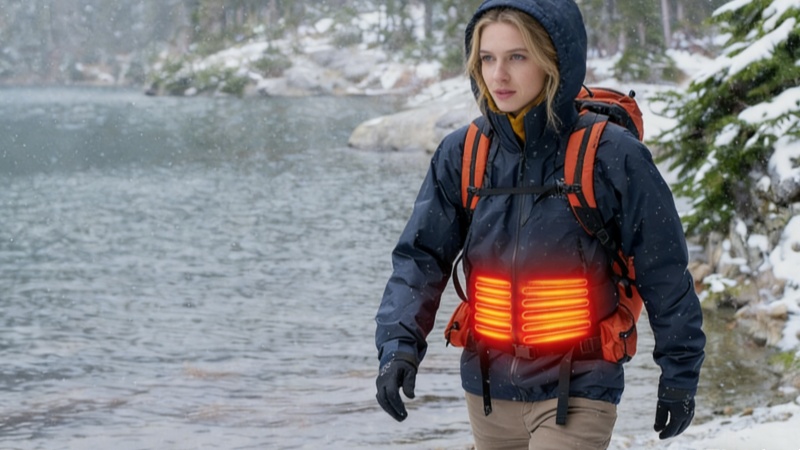
Carbon fiber heating elements dominate the market due to their flexibility, durability, and consistent heat output. Some brands are experimenting with graphene to improve efficiency and reduce power consumption.
6.2 Battery Systems
Most heated outdoor clothing brands use lithium-ion batteries operating between 5V and 7.4V. Runtime typically ranges from 6 to 12 hours depending on heat level and garment type.
6.3 Fabric Systems
Leading brands use weather-resistant fabrics that protect internal electronics while maintaining breathability and comfort. Proper fabric selection is critical to overall system reliability.
7. How JTL Garment Positions Itself Among Global Heated Outdoor Clothing Brands
7.1 A System-Oriented Development Philosophy
JTL Garment’s positioning among global heated outdoor clothing brands is the result of a deliberate, system-oriented development strategy rather than a purely market-driven or fashion-led approach. While many heated apparel brands evolve from either consumer lifestyle labels or single-category specialists, JTL Garment has established itself at the intersection of functional engineering, scalable manufacturing, and application-specific customization.
7.2 Technical Innovation: From Retrofitting to Integrated Thermal Systems
At a technical level, JTL Garment approaches heated outdoor clothing as an integrated thermal system rather than a conventional garment enhanced with electronic components. This distinction is critical. Instead of adapting existing jacket or vest designs to accommodate heating elements, JTL Garment designs garments around the requirements of heat generation, retention, and regulation from the outset. Heating zones, insulation thickness, fabric breathability, and battery placement are treated as interdependent variables within a unified design framework.
7.3 Grounded in Human Thermoregulation Science
From a scientific perspective, JTL Garment’s development philosophy aligns with established principles of human thermoregulation. Research in cold-environment physiology shows that maintaining stable core temperature—particularly around the chest, upper back, and lower torso—has a disproportionately positive effect on overall thermal comfort. JTL Garment reflect this understanding by prioritizing anatomically effective heating zone placement rather than maximizing the number of heating panels or peak temperature output. This results in more efficient energy use, reduced thermal stress, and longer battery runtime under real outdoor conditions.
7.4 Modular Adaptability and Use-Case Versatility
Another defining aspect of JTL Garment’s positioning is its emphasis on adaptability across use cases. Global heated outdoor clothing brands often specialize narrowly, such as urban commuting, motorcycling, or industrial workwear. JTL Garment, by contrast, develops modular design frameworks that can be adjusted for different environments, activity intensities, and climate conditions. Through variations in fabric systems, insulation structures, and heating configurations, JTL Garment products can be optimized for hunting, skiing, outdoor labor, or prolonged static exposure without compromising core system reliability.
7.5 Materials Science and System-Level Compatibility
From a materials science standpoint, JTL Garment places strong emphasis on the compatibility between heating elements and textile substrates. Heating performance is not evaluated independently, but in relation to fabric conductivity, moisture transport, and mechanical flexibility. This reduces the risk of localized overheating, material fatigue, or electronic failure during repeated wear, washing, and movement. Such system-level compatibility is a key reason JTL Garment products demonstrate stable performance over extended product lifecycles.
7.6 Manufacturing Rigor and Quality Assurance Protocols
JTL Garment’s position among global heated outdoor clothing brands is also reinforced by its manufacturing discipline and quality control philosophy. Heated apparel introduces additional complexity compared to traditional clothing, as electrical systems must maintain consistent performance despite exposure to moisture, vibration, compression, and temperature fluctuations. JTL Garment addresses this challenge through structured production workflows, multi-stage testing protocols, and controlled integration of heating components during garment assembly. This manufacturing rigor supports both product reliability and brand credibility, particularly in professional and B2B-oriented markets.
7.7 Strategic Positioning and Future Outlook
From a market perspective, JTL Garment occupies a balanced position between consumer-facing heated apparel brands and industrial or tool-affiliated labels. Rather than competing solely on price or visual differentiation, JTL Garment emphasizes performance consistency, customization capability, and technical transparency. This positioning appeals to buyers and partners who prioritize long-term reliability, repeatability of production, and application-specific solutions over short-term trends.
Importantly, JTL Garment’s approach aligns well with the evolving expectations of global buyers in the heated outdoor clothing segment. As the market matures, decision-makers increasingly evaluate brands based on engineering competence, system safety, and adaptability to real-world conditions. JTL Garment’s ability to communicate and demonstrate these qualities positions it as a credible and future-oriented participant among leading heated outdoor clothing brands worldwide.
In summary, JTL Garment positions itself not as a novelty-driven heated apparel brand, but as a system-focused, performance-oriented solution provider within the global heated outdoor clothing landscape. By grounding its product development in thermal science, material compatibility, and manufacturing discipline, JTL Garment has established a reputation for reliability and flexibility that allows it to stand alongside established international brands while maintaining a distinct and respected identity.
8. Final Thoughts
Heated outdoor clothing brands are reshaping expectations for cold-weather apparel by introducing active thermal regulation into everyday and professional garments. The best brands in this category demonstrate a clear understanding of how heating systems, fabrics, and garment construction must work together.
Among these global leaders, JTL Garment stands out as a reliable and forward-looking heated outdoor clothing brand, offering well-engineered products, consistent quality, and adaptable solutions for a wide range of outdoor environments. As demand for heated apparel continues to grow, brands like JTL Garment are well positioned to play a lasting role in the evolution of functional outdoor clothing.


